Showing posts with label South Korea. Show all posts

Tuesday, May 31, 2011

National Folk Museum Seoul Korea Most Popular Tourism

National Folk Museum shows the legacies of Korean culture and history. The National Folk Museum at Cregneash provides a living, working illustration of life in a typical 19th century Manx upland crofting community. Nestling under Meayll Hill and overlooking the Calf of Man, Cregneash is isolated from the rest of the Island and at the beginning of the 20th century was one of the last strongholds of the traditional customs, crafts and skills which characterised the Manx Crofter’s way of life.


National Folk Museum

The village now forms a centre for traditional farming practices and skills. Visitors can see the fields being worked with horse-drawn equipment, thatching of the roofs, dying of wool, spinning, weaving, wood-turning, black-smithing and a range of skills in the growing and preparation of food.

Admission to the National Folk Museum is by ticket only which provides entry to a wide variety of buildings throughout the village including the famous Harry Kelly’s Cottage. Regrettably, The National Folk Museum is not open during the winter months or after 17.00 unless by special arrangement for a private evening tour.

National Folk Museum

Admission to the National Folk Museum is by ticket only which provides entry to a wide variety of buildings, The National Folk Museum is not open during the winter months or after 17.00 unless by special arrangement for a private evening tour.  The National Folk Museum at Cregneash is accessible to wheelchair users, although the area above Cummal Beg is not accessible.


Visitor Information
For safety reasons, visitors are asked to take special care whilst visiting the National Folk Museum. Visitors are asked to wear suitable footwear and keep to defined routes as surfaces may be worn, uneven or slippery. Children should be kept under close supervision at all times.
Lavatories are available within the complex.
Photography and filming (for personal use only) and use of mobile phones is permitted.
Souvenirs and guidebooks are available to purchase at the Cummal Beg Shop.
Picnics can be enjoyed at the National Folk Museum.

Friday, March 18, 2011

Seoul Tower Favourite Destinations South Korea Tourism

Seoul Tower, a landmark of the metropolitan city of Seoul provides fun and excitement. It is viewable from anywhere in Seoul and serves as an excellent landmark. A 859 foot peak in Namsan Park, the tower reaches to 1574 feet above sea level. When weather and pollution levels cooperate, visiting the observation tower (1213 feet above sea level) allows you to view the entire city and surrounding areas. Because of the great view, many people enjoy climbing up here for early morning exercise or for a romantic stroll after dark.

Seoul Tower
up here for early morning exercise or for a romantic stroll after dark. From the highest point, Seoul Tower has embraced the city for 25 years giving memories and stories. In 2005, Seoul Tower was reopened as N Seoul Tower. Many citizens and foreign tourists have visited the Tower and have taken scenic views of the city while also enjoying the nature of Namsan mountain.

Seoul Tower

The tower’s unique structure and observatory section offers versatile views as the seasons change the appearance of Namsan. Adding to the colorful scenery of the mountain. Seoul Tower was renovated in 2005 with newly designed high-tech multi media. Seoul Tower now provides a new cultural space in the center of the city. You will have an unforgettable experience at N Seoul Tower,

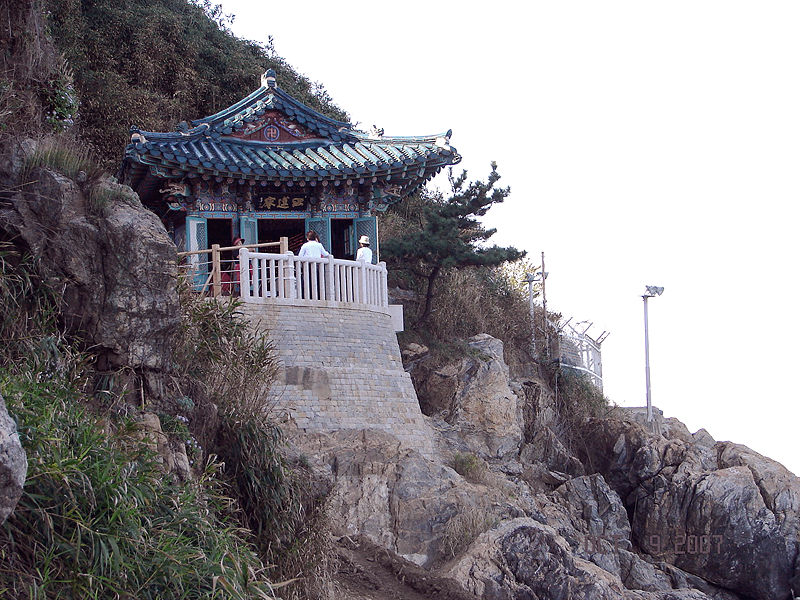
Jayu Park Historical World War II South Korea

The Jayu Park was built in 889. At the time, a lot of foreigners lived in Incheon with the opening of the Incheonhang Port and the Korean government constructed the first western-style park for them. As the park is located halfway up a mountain, you can overlook downtown Incheon, the Incheonhang Port and Incheon Bridge, the world’s sixth longest bridge, while hiking to the park.

The area around Jayu Park contains many 'firsts' in Korea, resulting from the Joseon Dynasty's enlightenment. To right of the ridge of the park is a white cylindrical building: Incheon Meteorological Observatory, behind Jemulpo High School. It was the first modern meteorological observatory in Korea, built by a Japanese who was in urgent need of meteorological information during the Russo-Japanese War in 1904. It managed data from Busan, Wonsan, and even Manchuria and Tientsin in China. Now it cooperates with the Japanese Central Meteorological Observatory and Greenwich Astronomical Observatory.

Jayu park

Jayu Park gives visitors a view that reminds them that Incheon is a harbor city. Many places in the park offer great views over the city and the sea. Among them, the square that used to have a pigeon cage provides the best view, and is worth the arduous trek. It offers the clearest and closest view of the harbor and nearby islands through pay telescopes. From Seokjeongru, a two-story pavilion, visitors can hear boat horns and whistles and see Incheon port dock, Wolmi Island, Incheon International Airport, Changbong Island, and other islands in the Yellow Sea.

Jayu Park

The Amity and the Trade treaty was signed by the US and Korea in the year 1882. Centennial Monument is situated inside the park which helps to demonstrate the bond between the US and Korea. The monument was built on the basis of the above treaty itself. The history of the park reveals that the park was previously known as Manguk Park which means a park for many countries together. The residents of America, Russia and China created this park. Jayu Park, Incheon is called the most western style park in Korea.


There is Weolmi Park modeled on typical gardens of the Joseon Dynasty. The park operates various cultural programs such as traditional wedding ceremony, Pungmulnori (ensemble of folk music instruments), traditional farmer’s music and traditional games every Saturday and Sunday.

Wolmido Island and Incheon South Korea

Mount Wolmi is the historical war place of the landing of US force in Wolmido Island. Civilians were not allowed to enter this place before 2001 since it was used by a military force but this place has been opened to civilians in 2001 and changed to a historical, cultural and biological park in 50 years. Wolmido Island is an island with a circumference of ㎞,0 ㎞ away from the coast of Incheon. Along the Wolmido Cultural Street are amusement parks, raw fish restaurants and cafes, attracting many visitors who want to take some rest in the West Sea. You can feel a festive atmosphere anytime here, as various cultural and art performances and events are held all year round.


Mount Wolmi has magnificent surrounding sites such as a port, lock and surrounding island which can be seen at one glance. Since civilians were prevented from entering this site for the past 50 years, a rich forest formed with cherry blossom trees, pine tress, oak trees, zelkova trees, alder trees, cypresses, Korean rosebays and Korean forsythias. Accordingly, Mt Wolmi’s climbing course is a courteous lane like Namsan’s climbing course.


Incheon  officially the Incheon Metropolitan City, is South Korea's third or fourth largest metropolis, after Seoul and Busan, and tied with Daegu. As the largest seaport on the west coast and home to the country's largest airport, Incheon International Airport, Incheon is South Korea's most important transport hub. In the 21st century, Incheon has transformed into a global business hub centered around the high-tech and futuristic Songdo International City, which is home to South Korea's tallest building, the 305m supertall Northeast Asia Trade Tower.


Incheon will incorporate New Songdo City, the most expensive planned real estate development in world history, which will be finished in 2015. The world's tallest twin tower building, 151 Incheon tower, is under early construction, whilst Korea's current tallest building, Northeast Asia Trade Tower, is already located here. Other newer neighborhoods built on land reclaimed from the sea are practically independent mini-cities with shopping, schools, housing, and industry.

Gayasan National Park The Wonder Secenery Landscape

The Gayasan National Park which is also known as Kayasan Mountain National park is one of the most notable national parks in South Korea. It was established in the year 1966 and covers about 80000 square kilometres. There are plenty of places in South Korea that are untouched by even the Korean inhabitants and still remain one of the tourist spots. Jirisan National Park is one of a kind. The South Korean Tourism Adventure, Tracking, Hacking and Climbing has taken urgent steps to promote these national parks.

Gayasan National Park

The Gayasan National Park Located in the deep inlands of south Korea, Gayasan was designated as the 9th national park in Korea in 1972. Gayasan was well-known as one of the 10 most beautiful spots in the East Sea area and as one of the eight scenic wonders of the Joseon dynasty. The total area of the park is 77Km it borders hapcheon-gun and Geochang-gun of Gyeongsangnam-do, and Seongju-gun of Gyeongsangbuk do. The Gayasan National Park highest point is split into two peaks, named Sangwangbong (1,430 m) and Chilbulbong (1,433 m).

Though Chilbulbong is slightly higher (by 3 meters), Sangwangbong is more well-known and usually listed as the primary peak. For all purposes, they can be considered a single peak. The lower part of the park is dominated by pines, especially around Haeinsa and on the road leading up to the temple. Deciduous trees are also common. In Autumn, the bright crimson of the maples and the yellow of the gingko trees sets the mountain ablaze, making Gayasan one of the top parks for visits during the fall season. The park also contains the beautiful Hongnyudong Valley, Yongmun Falls, and two impressive standing images of the Buddha on the mountain.
Kayasan Mountain National park

Gayasan National Park is a small park, but blessed with wonderful moderate-level day-hikes. The ascent to Sangwangbong takes about 2 hours from Haeinsa, winding up through lush forest along the river. As hikes go, it's not a steep climb, but rises quite gently most of the way until the final 30 minutes. At that point, the trail breaks out of the trees and amazing views of the valleys and ridges can be seen (if the weather allows it). The trails are well-maintained and well-marked. From Sangwangbong, you can hike over to Chilbulbong in about 15 minutes. As always, to enjoy your hike the most, it's best to start early while the light is still spectacular and before the mountains are flooded by mobs of yappy tourists.

Naksansa Temple The Buddhist Temple Most Popular Korean Tourism

Naksansa Temple is located in Naksan Provincial Park and is one of the few temples that overlook a sea of Korea. It was built by Uisangdaesa, a revered Buddhist monk in 671. Within the park are many rivers and beautiful beaches to visit. Naksansa provides a spectacular sunrise view and beautiful sounds of breaking waves. Inside the temple are cultural artifacts such as the Hongnyeonam Hermitage, a bronze bell, and the Hongyemun (gate).

Naksansa Temple

When you have free time, visit the 7th Century Shinhungsa Temple, located next to Sorak Tourist Hotel; it claims to be the country’s oldest Zen temple. The valley to the left of the temple is Chonbuldong, the most beautiful valley in the park with a view of Miruk Peak that rises majestically above the valley. Legends are told of the heavenly nymphs who come to laugh and play while they bathe in the numerous pools throughout the valley.

Naksansa Temple is crowned by the Buddhist statue of Haesugwaneumsang (Bodhisattva of Mercy), known as the goddess Gwanseum-Bosal, facing southeast standing 15 meters high on a 2.8-meter high pedestal. The white granite statue stands in a clearing at the top of the hill, eyes and fingers closed in peaceful meditation as it gazes out to sea. The massive statue is the work of Busan sculptor Gwon Jeong-hwan and was dedicated in 1977. 700 tons of granite and six months were required to complete the sculpture. It is the largest Buddhist statue of its kind in the Orient. Hongreanam was built by Uisang as a Hermitage above a stone cave. In the sanctuary floor there is a 10-centimeter opening through which you can see the sea below.

Naksansa Temple

Naksansa has many places to see. There is the famous statue of Gwanseum Bosal, looking down over the East Sea with a broad smile. At the Uisangdae Pavilion, which is a popular spot for watching the sunrise, you can gaze over the vast sea. At the Hongryeonam (Red Lotus Hermitage) Hall, you can look down through a hole on the floor and see the sea. If you lift a small floorboard here, you will see the Gwaneumgul Cave down below. The sound of waves crashing in the cave is in such harmony with the sunrise over the East Sea that they create a sense of wonder for many people.

Naksansa Temple

Besides these, Naksansa has the Hall of Complete Penetration (Wontongbojeon), the Main Buddha Hall (Botajeon), and a lotus pond. In front of the Hall of Complete Penetration stands a seven story pagoda, which is registered as Treasure No. 499. Naksansa’s symbol, the great standing statue of Gwanseum Bosal was created in 1977, and stands a height of no less than 16 meters.

Mount Sorak The Wonder Rock Include Priyong Warefall

Mount Sorak is the third highest mountain in the country, with the main peak (Daechung) at an altitude of 5602 feet. Situated on the east coast of the Korean Peninsula in the Taebaek Mountain range, it is composed of mostly granite with rocky hills and ridges. It is also home to the Asian black bear. The main activities here are hiking, camping, and climbing and is a favorite vacation spot in Korea. Take a short cable-car ride or hike to the peak for a breathtaking panoramic view of the surroundings.

Mount Sorak

The entrance city for Mount Sorak National Park is the sea port of Sokcho in the northeast corner of South Korea. Sokcho is a modern city with a busy harbor area. Being a sea port, it has variety of fish, squid, octopus, shellfish, and other delicacies that you can order either raw or cooked.

Mount Sorak is the highest point in Mount Sorak National Park. The park is an area of steep granite cliffs, densely forested slopes, and deep valleys with rivers and waterfalls. The park’s bedrock is a light, pinkish-gray granite. There are numerous trails, bridges, temples, and concession stands. Trails near the park entrance are well marked and easy to walk, while further inside the park, the trails become narrow, rocky, and steep.

Mount Sorak

The Mount Sorak national park attracts many national and international tourists all year round, but the main season for Seoraksan national park is autumn. The autumn colours in the area are considered amongst the most beautiful in Korea. The red and yellow forest is interrupted by rocks and small mountain streams flow amidst this. During the rainy season in summer especially after a typhoon these streams can swell. Perhaps the most visited part of the mountain is the main entrance valley to the Mount Sorak National Park, a fifteen minute drive from Sokcho city. The valley runs west to east with a paved road leading up to the park's entrance gate. This valley contains many beautiful sites and is well worth a day visit.

Mount Sorak Cable Car

The trail to Piryong Waterfall is wide, easy to follow, and shaded by evergreen trees. Piryong Waterfall cascades into a large, deep pool at its base. The pink and yellow colors from the granite contrast beautifully with the green of the forest.

The trail leads to Allak Temple, which has a magnificent view of the valley below and of the East Sea. A river divides the mountain range by its two tributaries. The left tributary and trail leads to the Chonbuldong
Valley, while the right tributary and trail leads past the Shinhung Temple to Ulsanbawi. The upper cable-car station also has a good view of the park entrance.
Piryong Waterfall

For the non-hikers, there is a modern cable- car, which begins on the valley floor near the park entrance and
rises almost to the top of a mountain called Kwongumsong.

Haengju Fortress Most Popular Attractions In Korea

Haengju Fortress
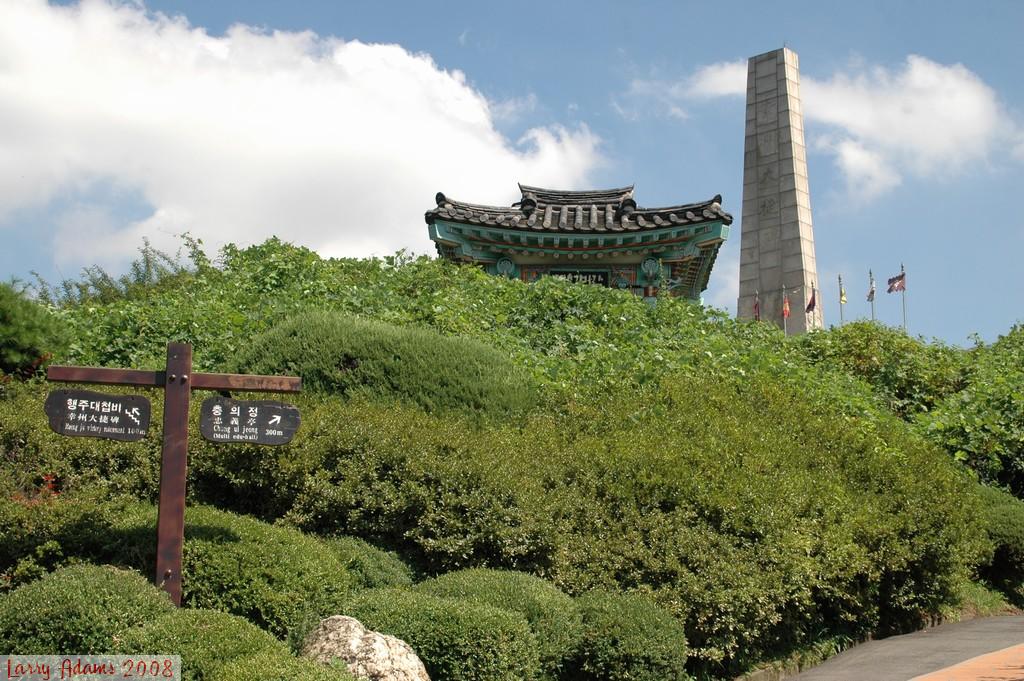
Haengju Fortress is in the eastern part of Seoul, just across the Han River from Gimpo International Airport. Haengju was the site of one of the bloodiest battles during the Japanese invasion in the 1590s. After Seoul fell to the Japanese, General Kwon Yul led a small army of 2,300 to the Haengju Fortress to recapture the capital. Among the army was a contingent of monks led by Monk Choyoung. The battle at Haengju Fortress is considered to be one of the most influential victories against the Japanese aggressors. After the war ended in 1602, the government built a monument on the summit. Both were destroyed during the Korean War, but were rebuilt during the 1960s.

Haengju Fortress

The Hengju is monument was rebuilt during the 1960s. During that time, the area was landscaped to form a park, and Ch'ungjang-sa Shrine was built to to house Gen. Kwon's portrait. A memorial hall was added and the area further landscaped in the 1970s. Today, the area forms a lovely park, nestled in the hills overlooking the Han River. It includes a small museum with replicas of the weapons used during the battle.

Haengju Fortress

During that time, Ch'ungjang-sa Shrine was built to house General Kwon's portrait and the area was landscaped to form a park. A memorial hall was added and the area was further landscaped in the 1970s. Today, the area forms a lovely park, nestled in the hills overlooking the Han River. It includes a small museum with replicas of the weapons used during the battle.

Changdeok Palace Popular Changdeokgung Large Park in Seoul

Changdeok Palace (Changdeokgung) is located within a large park in Seoul and is one of the Five Grand Palaces built during Joseon Dynasty (1392-1910). Changdeokgung is also known as the East Palace because its location east of Gyeongbok Palace. The literal meaning of Changdeokgung is "Palace of Prospering Virtue."

The Changdeokgung palace was built between Peak Maebong of Mt. Bugaksan in the back and Rivulte Geumcheon having flowing in the front influenced by the principle "baesanimsu" in Feng Shui theory. Contrary to Gyeongbokgung whose main buildings are arranged in accurate architectural principle, however, buildings in Changdeokgung are disposed more freely without a regular system. Though its structure seems chaotic at a glace, all buildings are in harmony with the environment surrounding them.

Changdeok Palace

Changdeokgung was the favorite palace of many kings of the Joeseon Dynasty and still retains many Korean architectural elements dating from the Three Kingdoms of Korea period (1200-1300s). These elements differed from the then-popular and more formal style of times, as seen at Gyeongbokgung (Gyeongbok Palace). One major difference is that the buildings of Changdeokgung blend with the scenery of the area, vice contrasting like the palace at the Forbidden City in China.

Changdeokgung Palace

Construction of Changdeok Palace began in 1405, was completed in 1412, and spanned 110 acres. The Palace was burned down during the Japanese invasion in 1592 and later reconstructed in 1609. Changdeokgung was the site of the royal court and the government until 1872, when the neighboring Gyeongbok Palace was rebuilt. Today, there are 13 buildings remaining on the palace grounds and 28 pavilions in the gardens.

Changdeokgung-Changdeok Palace

The Changdeok Palace was burnt to the ground during the Japanese invasion in 1592 and reconstructed in 1609 by King Seonjo and King Gwanghaegun. The next arson was in 1623 because of King Injo Political Revolt against Gwanghaegun. The palace was also attacked by the Manchu Qing but throughout its history of reconstruction and repair has remained faithful to its original design. Changdeokgung was the site of the royal court and the seat of government until 1872, when the neighboring Gyeongbokgung was rebuilt. Korea's last Emperor, Emperor Sunjong lived here until his death in 1926.

Han River Cruise Yachting, Boating, and Fishing

Han River runs through Seoul and divides the city into its northern and southern region. In Korea’s history, this river has played an important role in the development of the capital city. In current times, this river serves as a place of escape, where people can go in order to enjoy the weather, have a nice walk, or indulge in a cruise. Along the 26 mile river, there are many parks where people can participate in soccer, volleyball, basketball, swimming, water skiing, yachting, boating, and fishing.


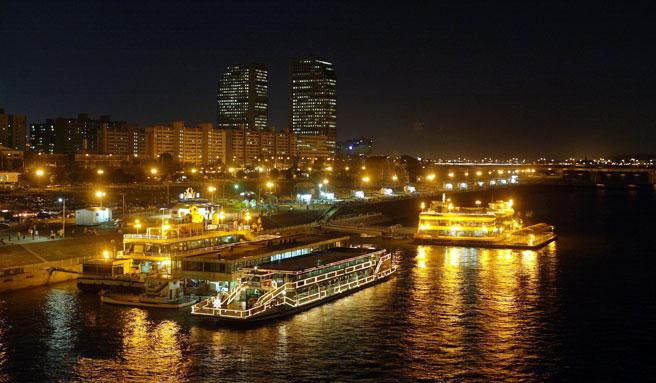
The depth of the water averages 8 feet and its width averages 574 feet. The Han River Pleasure Boat takes people on a cruise along the river; visiting historic sites as well as picturesque views. The boat can be accessed at four different locations: Yoido, Chamsil, Dooksum, and Yanghwa. The boat is also quite a sight to see at nighttime when its lights are turned on to illuminate the river beneath it.


The Han River Cruise will be held on the evening of the 26th August. You could taste summer wind on the boat and also can appreciate a beautiful view of Seoul at night, enjoying a buffet on the boat. You can also enjoy performance of Philippine Trio Band. You will get the memory of unforgettable night in Korea.


Han River, which stretches through Seoul’s city center has become not only a resting place for Seoul’s citizens, But also one of the most popular tourist attractions in Seoul. A way to truly enjoy this river is to ride the Han River Cruise Ship. The ship can be taken either one way or as round-trip. The view from the cruise ship includes the Various bridges of the river, as well as the islands, the National Assembly and the 63 Building.

Jogyesa Temple Traditional and Unique Temple Korea

Jogyesa Temple Traditional and Unique temple korea does not give off the solemn and traditional air of the other temples located deep in the mountains, or offer the seasonal scenery of the mountains and the sea. But because it is located in the middle of the city, the transportation is convenient, and is well connected to the surrounding areas. It is good for tourists on a tight schedule. Along the street around Jogyesa Temple are many Buddhist specialty shops, selling such things as prayer beads, Buddhist writings, incense, as well as souvenirs such as dolls and key chains.
Jogyesa Temple

Jogyesa Temple In 1954, after the great clean-up movement to rid the coun-try of any vestiges of the Japanese occupation, the temple came to be called Jogye-sa. This is the name of the mountain on which the Sixth Patriarch of Chinese Chan Buddhism, Huineng (638-713), lived. He is highly revered by Korean Buddhists and his life and teachings are constantly studied and remem-bered.


These locust trees and baeksong trees in front of the Daeungjeon, the main temple building, are about 500 years old. One locust tree is about 26-meter high, and in the summer, provides a large amount of shade to enhance the mood of the temple. The baeksong tree is designated as a Natural Monument. The Daeungjeon building is a stately building built in 1938. The Dancheong is particularly beautiful with all the different colors painted on it, and inside the building is the statue of Seokgamoni.


Situated in downtown Seoul, Jogyesa is a peaceful oasis. This temple is open to visitors from 4:00am to late at night, and all Buddhist events held here are open to visitors. It also has exhibits explaining much of the history of modern Buddhism. A variety of temple-stay programmes are also available.

Tuesday, February 22, 2011

Banpo Bridge Fountain Uniques and Amazing In Seouls

The Banpo Bridgeis a major bridge in downtown Seoul over the Han River, South Korea, connecting the Seocho and Yongsan  districts. Banpo Bridge is on top of Jamsu Bridge, forming a "double deck" bridge. When the water level rises too high, the Jamsu Bridge becomes covered with water and gets closed off. The lower deck incorporates pedestrian and bicycle paths that provide easy access to the Banpo Hangang Park from the north side of the river. Banpo Bridge is a girder bridge  and was completed in 1982.


Banpo Bridge Fountain is very original of the kind. 380 nozzles equipped along the both sides of of Banpo Bridge (570m each, 1140m in total) pump up the river water which will fall from the top toward the surface of the river 20m down. 200 lightings equipped around the fountain provides a gorgeous view of a beautiful rainbow while the columns of fountain water dancing to the music offers a unique and joyful experience to the public. The fountain has been registered in the Guinness Book of Records last December as the world’s longest bridge fountain.


Banpao Bridge South Korea

Lotte Super Tower 123 Amazing In South Korea

Lotte Super Tower 123 is a 123-floor supertall skyscraper currently being erected in Lotte World 2, Seoul, South Korea. It is located next to the existing Lotte World complex which opened back in 1989. Ground was broken in 2005 but due to nearby airport's height restrictions, further construction was postponed to February 2010 when restrictions were removed in 2009. At 555 m (1,821 ft) in height, the building would become one of the world's tallest buildings if completed on schedule in 2014.  The Lotte Group of South Korea is owner and developer of the project.


The architectural team is led by KPF design principal James von Klemperer. The concept melds a modern aesthetic with forms inspired by the historic Korean arts of ceramics, porcelain, and calligraphy. “The tower’s uninterrupted curvature and gentle tapered form is reflective of Korean artistry. The seam that runs from top to bottom of the structure gestures toward the old center of city,” said von Klemperer. “Elegance of form was one of our prime objectives, following Lotte’s desire to bestow a beautiful monument to the capital city skyline,” he added.

Busan Lotte Word Most Popular Attraction In Seouls


Depart on your seat in coach tour to Lotte World Theme Park, Seoul Tower. The landmark tower is the centerpiece of the new Busan Lotte Word and construction is being carried in two phases. The first phase includes a department store, completed in 2009, the second phase an addition to the department store, completed in 2010, the third phase a mart and a cinema, which is to be completed in 2014, and the last phase the larger second phase will include a luxury hotel, an observation deck, offices and cultural facilities in a 110 story skyscraper.  The design of the skyscraper will resemble a standing ship, with grand curves reflecting the city's harbour. The tower's underground parking space will be able to house over 2,400 cars.


Namsan A Mountain with Buddhist Cultural

Mt. Namsan, located to the south of Gyeongju, contains numerous important Buddhist and Silla Dynasty sites. Stretching 8 kilometers north and south, and 12 kilometers west and east, Namsan contains 180 peaks and about 40 valleys dotted with relics of temples, 80 stone images of Buddha and 60 stone pagodas.


Among the noteworthy treasures found at Namsan are the sitting stone statue of Buddha at Mireuk Valley and the sitting image of Bodhisattva carved on Sinseonam (stone wall). There are also twelve designated historic sites such as Poseokjeong (Historic Site No. 1), Najeong (Historic Site No. 245) and the site of Cheongwansa (Historic Site No. 340). Particularly striking is the sitting figure of Sakyamuni in Samneung Valley, carved on a huge natural rock 7 meters high and 5 meters in width.


All around the mountain is a lush forested park, replete with picnic tables, walking paths, and little public bathroom buildings with canned classical music. Its nice. Although it was hotter than blue blazes and we had to walk uphill for a half hour to get there from the subway station.


Cheomseongdae Astronomical Observatory

Cheomseongdae is a stone tower well known as the oldest astronomical observatory in the East. Cheomseongdae is about 9 meters in height and looks like a round bottle. This stone tower was made by laying 27 stones in a neat pile on the square foundation stone and by putting a square stone on the piles like a lid. The tower has a 1-meter by 1-meter window facing south. The tower’s architecture is highly valued for the beauty of its elegant curves and the exquisite harmony between a square and a circle.


This stone structure is a beautiful combination of straight lines and curves, and was designated as National Treasure No.31 on December 20th, 1962.  Cheomseongdae was built in a cylinder shape with stones 30cm in diameter. 362 stones were piled up to make 27 levels. 4.16m up from the bottom there is a 1㎡ square entrance and a space to hang a ladder under it.  The inside is filled with soil up to the 12th level, and the 19th, 20th, 25th, and 26th levels all have long rocks hanging on two areas, shaped as the Chinese letter (jeong).  It stands 9.17m high and the base stone on each side measures 5.35m.

Gyeongju National Museum Dating From The Silla Dynasty

The Gyeongju National Museum exhibits numerous relics dating from the Silla Dynasty. The museum is divided into three main halls and an outdoor garden, housing a total collection of 2,700 pieces. The museum contains various items excavated throughout Gyeongju and neighboring areas, as well as sculptures and paintings. Relics unearthed from the old burial mounds of the Silla Period, including splendid jewels and ornaments can be found in the Ancient Tomb Hall.


The outdoor garden contains Korea’s largest bell (National Treasure No. 29). Officially known as the Divine Bell of the Great King Seongdeok, this 3.3 meter-high bell is better known as Emile Bell because it is said to sound like a child crying for its mother.

Descriptions are available in English throughout the museum. Gyeongju National Museum Various Relics of the Silla Period All Together The Gyeongju National Museum exhibits numerous relics dating from the Silla Dynasty. The museum is divided into three main halls and an outdoor garden, housing a total collection of 2,700 pieces. The museum contains various items excavated throughout Gyeongju and neighboring areas, as well as sculptures and paintings. Relics unearthed from the old burial mounds of the Silla Period, including splendid jewels and ornaments can be found in the Ancient Tomb Hall.

The outdoor garden contains Korea’s largest bell (National Treasure No. 29). Officially known as the Divine Bell of the Great King Seongdeok, this 3.3 meter-high bell is better known as Emile Bell because it is said to sound like a child crying for its mother.

Gyeongju National Museum Most Popular South Korea tourism

Daewangam Park The Beautiful Landscape South Korea Trip

Daewangam Park exceeded my expectations. There are a few things you can do there. First, you can walk around the peninsula while taking in the picturesque coastal scenery and you can visit an old lighthouse. It’s not a long walk and not strenuous at all. Second, you can cross a footbridge to get to a beautiful set of rocks just meters from the shore.


Third, you can enjoy fresh seafood harvested by Haenyeo women divers from the nearby waters or just bring your own picnic, like I did, and eat it while sitting on the rocks or under a shady tree.
Located a short walk from Ilsan beach, clustered together and leading into one-another are Ulgi and Daewangam park, along with Daewangam rock (shown here). These are must see sights for anyone travelling through or staying in Ulsan.

Daewongam park is a rock island located off Ulsan accessible by an iron bridge and offers some amazing views. King Mummu, the 30th king of the Silla dynasty achieved unification of the countries of the Korean peninsular in AD 668 and upon his death desired to become a dragon to protect his kingdom from enemies. Thus he was buried under a great rock in the East Sea and became a guardian dragon. However his rock is up the coast somewhat in Gyeongju but his queen is right here in Ulsan. She became Daewangam rock.

Temuli Park UNESCO Heritage Most Atteactions Popular South Korea Tourism

The Temuli Park UNESCO HERITAGE has more than 20 large and small tombs from the Shilla period and has been designated Historic site #175. The tombs are presumed to be those of kings and court officials. The dimensions of the tombs vary with heights range from less than 1 meter to 23 meters. Most of them are earthen and mound-shaped. Some double gourd-shaped ones are for the joint burial of a husband and wife. As those excavated were all found to be stone-pilled wood-lined chamber type, most of the tombs here are presumed to be of the same type.


This Temuli park one has been partially excavated and turned into an exhibit containing various artifacts and explaining how the tombs were built. Tumuli Park is home to numerous tombs from approximately 1500 years ago.  The only tomb that has been identified for sure, through documentation, is that of King Michu, from about 1750 years ago. The other tombs have been dated, using radio-carbon dating, so there are fairly good guesses about whose tombs they are, but no proof, at least that was the impression I got from our tour guide.  One of the tombs has been partially excavated, and has been turned into an exhibit, which is open to the public. 

In this particular exhibit, there was a tour guide who spoke English, though he was quite difficult to understand, largely because of a very very thick accent.  A lot of what he said had to do with explaining that the artifacts found in the tomb offered proof that either Koreans had contact with Mongolia and Tibet, or originally came from there (I could never really figure out which he was saying).  The old man was very nice, and he spoke more English than almost anyone else I had seen in Gyeongju.  Most of the other English I heard was along the lines of what one vendor in the park said:  "Buy this book!!!" while waving a book about the city at me.