Showing posts with label Hawker Food. Show all posts

Monday, December 20, 2010

Eating in Kuala Lumpur - Yeoh's Bah Kut Teh in Klang

Bah Kut Teh is a very popular hawker dish in Malaysia and Singapore. There are a few versions of how this famous dish started. The most credible seems to be the Klang version. Klang is a seaside town near Kuala Lumpur which has since become an important port for Malaysia. Legend has it that a gentleman from Quanzhou brought this dish to Klang, having learnt the secret recipe from a chef over there. This hearty herbal soup was very popular with the port workers, they ate it with plenty of rice to give them energy for their strenous work. 

One version of this story goes futher to explain the origin of the "Teh" in Bah Kut Teh. Bah Kut is basically Chinese for pork ribs. "Teh" in Chinese means tea. But there is no tea in Bah Kut Teh, besides the tea which is normally served alongside. So where did the "Teh" come from ? Well, this version of the story says that the gentleman from China who brought the recipe to Klang was named "Tay". Customers used to call him "Bah Kut Tay" as his shop was very popular. In time, it became Bah Kut Teh !

Bah Kut Teh is basically pork ribs in a rich herbal soup. The herbal soup is made by boiling pork bones together with Chinese herbs and soy sauce. The pork ribs and other ingredients such as pork meat, offals, tougues, etc. are usually cooked separately and added to the broth before serving. Pork liver, kidneys and fresh pork are sometimes added, as per the customer's preference.

Klang is no doubt the centre of Bah Kut Teh. There are over 500 shops selling this popular dish, and on weekends folks from all over Klang Valley make a beeline to this port town for their weekly treat. Different people have different preferences - taste is very personal, so it is hard to say which shop serves the best Bah Kut Teh. A friend took me to Yeoh's Bah Kut Teh in Klang, a very popular but hard-to-find outlet as it is tucked away behind an old building and not in a normal shophouse. 

The Bah Kut Teh here is one of the best I have tried. The herbal taste is quite subtle, with the soy sauce more pronouced. There is a nice balance of saltiness and sweetness from the pork meat. They are also famous for their stewed pork knuckle. The skin has been removed, and the knuckle stewed in soy sauce till tender and full of flavour. Taken with rice and a chili and soy sauce dip, this bak kut teh is a real treat !

The obscure backlane leading to Yeoh's Bak Kut Teh.

The Bak Kut Teh.

Side order of pork ribs. You can also order other side dishes of offals, pork liver, kidney, etc.

The stewed pork knuckle.

Eating in Kuala Lumpur - Charn Kee Tasty Corner at Jalan Alor

Jalan Alor has become renowned as the "Food Street" in Kuala Lumpur. Located right in the city centre, running parallel to the popular Jalan Bukit Bintang, this short street is packed with coffee shops and restaurants serving Chinese dishes and hawker food. It is popular with the locals as well as visitors who have discovered this food haven. Busy during all times of the day, it really comes alive at night when the street hawkers open for business.

Visitors to Jalan Alor would no doubt have come across Charn Kee Tasty Corner, a coffee shop famous for it's noodle soup with fishballs. The fishballs here are really good, handmade and with just the right texture that is not too firm or too soft. The extra taste comes from some additional ingredients which I think includes a dried and roasted fish powder normally used by the Chinese to season soups. 

The most popular dish here is the claypot fishball noodle soup. They also serve "lum mee", tomyam seafood noodle, and Nonya curry noodle. For your first visit you should definitely try the claypot fishball noodle. The soup is really tasty - made with very good seafood stock, and filled with bits of seafood, fishballs and topped with bean sprouts and fried shallots. The Nonya curry noodle is also very good. The sauce is more soupy then the traditional Nonya curry, but is still very aromatic. You should get a side order of the special fishballs and dumplings. The fishballs are bigger then the ones served in the noodle soup, and really tasty.

The coffee shop from Jalan Alor, and the interior.

The claypot fishball noodle soup.

Nonya curry noodle.

The side order of special fishballs and dumplings.

Tuesday, December 7, 2010

Bangkok - Street Food

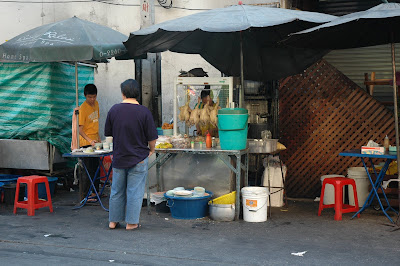
In Bangkok you will never starve - if you have money that is. But you don't really need much to feed yourself here, and the variety and taste of the street food is simply amazing. Everywhere you go, every street corner you turn to, there are bound to be stalls selling noodles, barbecued meat, grilled bananas, fish cake, som tum (green papaya salad), etc. 

The stalls start very early - about 6.00 a.m. serving customers on their way to work. They are open all day until evening when the streets are taken over by other stalls selling t-shirts and souvenirs. Prices are really cheap by Western standards, but be prepared to put up with local hygienic standards. So far I have never gotten sick from the street food though, and this is one of the joys of Bangkok you wouldn't want to miss.

Saturday, November 6, 2010

Kuching Hawker Food - Grace Place

Grace Place is a coffeeshop located at Stutong Commercial Centre. Being not so well known, it is usually not too crowded. This little coffeeshop serves some really nice hawker food.

The laksa here is quite good. It is a standard laksa, but garnished with a lot of fresh parsley and coriander. The broth is flavoured with lemongrass, which is not common for Sarawak Laksa. The taste profile is a bit closer to tom yam soup.


This is Cha Kueh - pan fried white raddish cake seasoned with pepper, garlic and chopped "chai poh" - preserved raddishes. Eggs are normally added. The raddish cake by itself is quite bland, but the rest of the ingredients give this dish a simple savouriness which is great when you are trying to give your tummy a rest from overly rich food.


This is a popular local dessert called "Lek Tau Suan" - essentially cooked mung beans in a sweet thickened soup. The soup is thickened with either sweet potato flour or more commonly water chestnut flour. Pandan leaves are used to flavour the soup, and it is usually sweetened with rock sugar. This is great with "yew cha kueh" - fried dough fritters which gives it a crunchy texture.


A view of the coffeeshop.


Kuching Hawker Food - Kueh Chap

Kueh Chap is the Chinese version of "nose to tail" eating. In the early days, it was made mostly with the offals and other less premium cuts of a pig - e.g. the nose, ears, cheeks, tails, skin, etc. Nowadays, kueh chap like most other frugal food of the old days have become popular hawker fare, and usually elevated to more premium levels. A Kueh Chap Special will easily set you back RM 5.00 or more, which is a large sum for hawker food.

The pig parts including meat, offals, skin, etc. are cooked in a soy-sauce based broth with light Chinese herbs and spices. You can detect hints of star anise and five-spice powder. When properly prepared and cooked, there is totally no foul ammonia taste from the offals. The best parts are the big and small intestines. All these different parts give this dish it's unusual variety of textures.

A good Kueh Chap will have a broth which has a savoury sweetness, with very little visible oil in the soup. It is served with rice noodles, but cut into large triangles instead of the more usual strips.

The new Yeow Kee Kopitiam at 101 Commercial Centre serves a good version of this popular dish.

Yeow Kee is one of the new generation of coffeeshops where the decoration is a bit better then the regular coffeeshop. It's also clean and bright.


Tuesday, November 2, 2010

Phuket - Street Food

Phuket street food is not as varied as in Bangkok. I only came across some road side stalls near Ranong Road. Unlike in Bangkok where grilling seems to be the preferred method of preparation, here in Phuket they prefer deep frying. Almost everything is deep fried and covered in a thick batter. Under the hot sun, it was a bit too much for me to try them out.

I did try some of these grilled bananas slathered in a thick caramel sauce. Very sweet and quite delicious, though sinfully full of calories.

I also couldn't resist trying these sausages. As this was a Muslim stall, the sausage was made of beef. It had a nice smoky taste, but a bit too salty. It would have been better grilled rather then deep fried.

A typical coffee shop. Not unlike those in Kuching. This one sells noodles with seafood. There is a large Chinese Hokkien population in Phuket, so Hokkien noodle is common here.

This shop sells conveniently packed lunch take outs. They all look quite delicious.


Just like in other parts of Thailand, food is plentiful in Phuket. If you have a few bucks in your pocket, you wouldn't starve here.

Monday, August 16, 2010

Kuching Food Festival 2008 - Part 4

This is another one of the popular Thai stalls. The green papaya salad is quite good.


Some of the Thai goodies on sale.


Deep-fried"Prawn Pizza" - actually prawns in batter which is normally eaten with a sweet chili sauce.


The famous Kuching "sio pau" - roast pork pies. These are great as a morning or afternoon snack.


These are "hum chee peng" - a popular deep-fried snack made from flour, cinnamon powder and sugar.


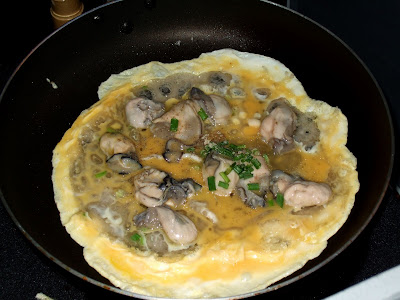
The "oh chien" or oyster omelet being made to order.

Sunday, August 15, 2010

Kuching Food Festival 2008 - Part 3

The choice of food is really quite good. It is definitely not possible to sample everything in one visit. So - if you are a real food lover, prepare to make a few visits.

This lady is selling 'chah kueh", a popular hawker dish which is actually pan-fried radish cakes with eggs, light soy sauce, pepper and eggs. A very simple yet delicious dish.


One of the many stalls selling Taiwanese sausages.


This guy is selling some kind of Japanese pan cake.


Deep-fried heaven !


More Taiwanese sausages. They come in pork or chicken, with various flavoures like black pepper, spicy or original. The texture is very similar to European sausages, but the meat is slightly cured, and the taste is usually a bit sweet.